The hand wash vs automatic car wash choice comes down to what touches your paint, and what is on it at the time. A professional hand wash is the gentlest option for paint. A touchless automatic rinses the body but leaves bonded grime behind. A brush rollover carries the highest risk of fine scratches.
That is not only a hand wash crew talking. AAA, the American motoring association, tells drivers to hand wash their car or take it to someone who will, and XPEL, the paint protection film maker, warns that spinning brushes can collect dirt that leaves micro scratches. It is also why there is no automatic tunnel at any Thunder Brothers branch. Every car is hand washed by the team, at 48 branches.
Below, the three kinds of car wash are compared on paint, wheels, the chassis, water and value, with a checklist for using an automatic and a safe way to wash at home. If you would rather hand it over, our car wash services run at 48 branches, with no need to book.
-
The Three Kinds of Car Wash in South Africa
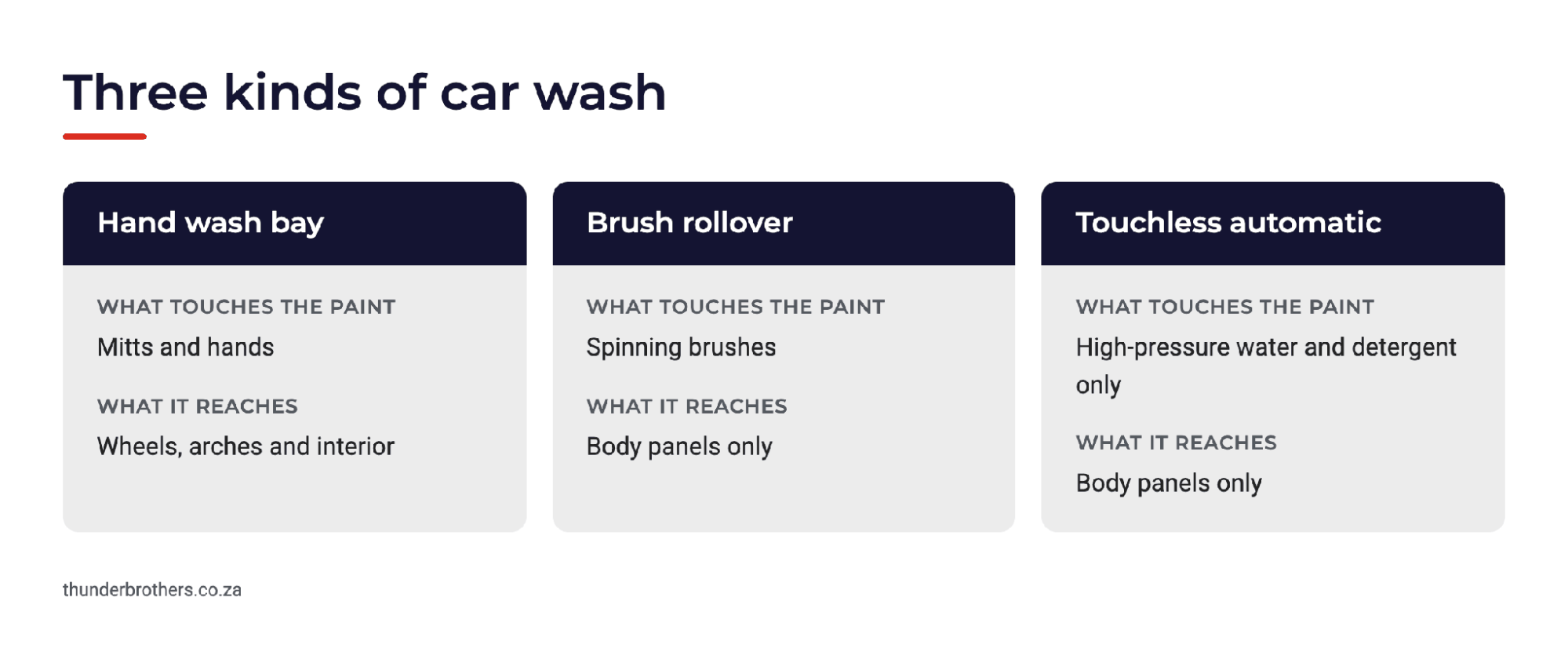
In South Africa the hand wash bay is the norm, and the automatic option is usually a rollover at a fuel station.
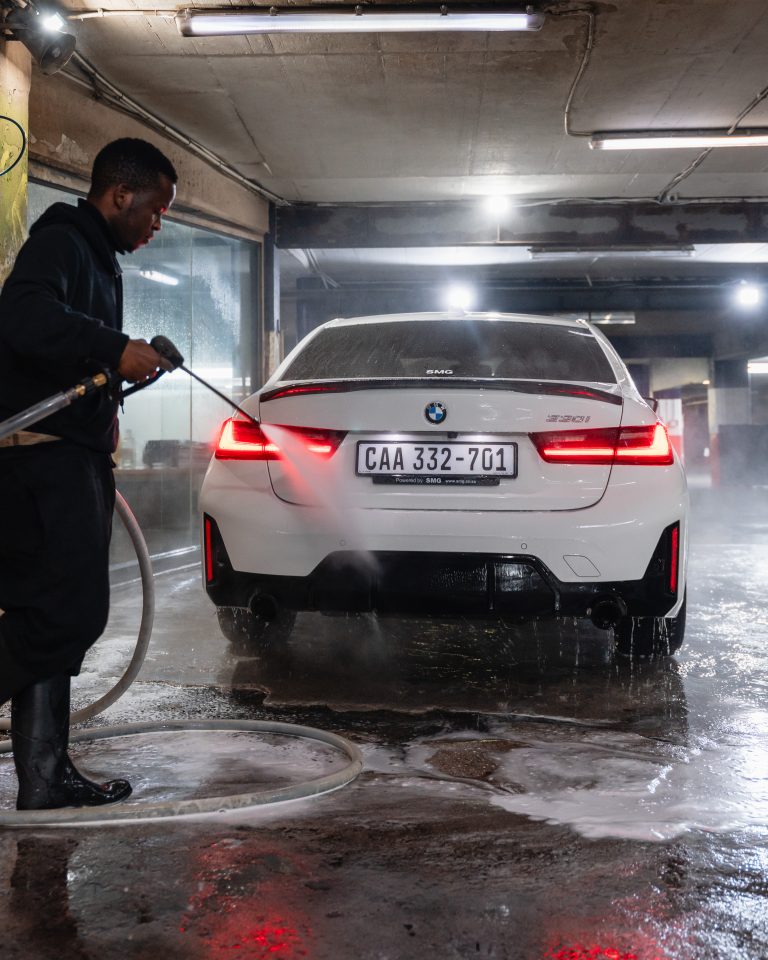
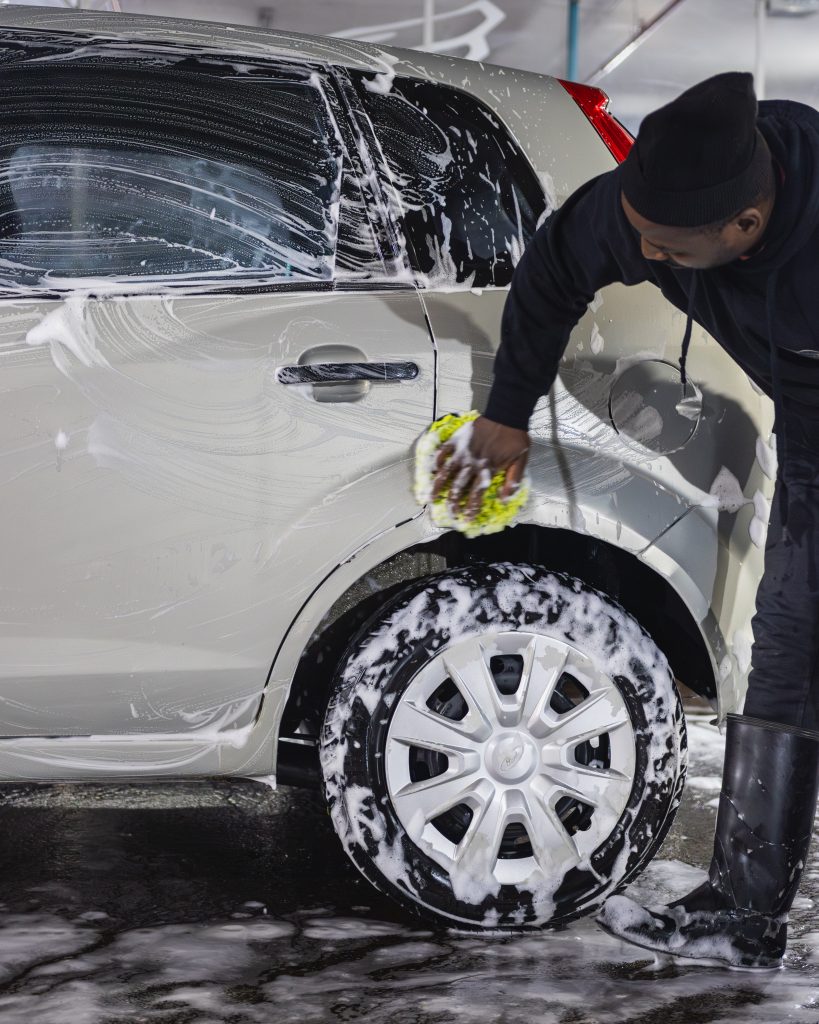
- Hand wash bay. People wash the car with mitts, buckets and a hose or pressure washer.
- Brush rollover or drive through car wash. Spinning brushes wash and rinse the car, in a bay or on a conveyor. A tunnel wash is the bigger version.
- Touchless automatic. High-pressure water and detergent, with nothing touching the paint.
A self-service jet wash bay, where you hold the lance, sits closer to a hand wash, because the result depends on you.
-
Paint and Swirl Marks: Where the Risk Comes From
Dirt does not scratch paint on its own. Dragging it across the paint does.
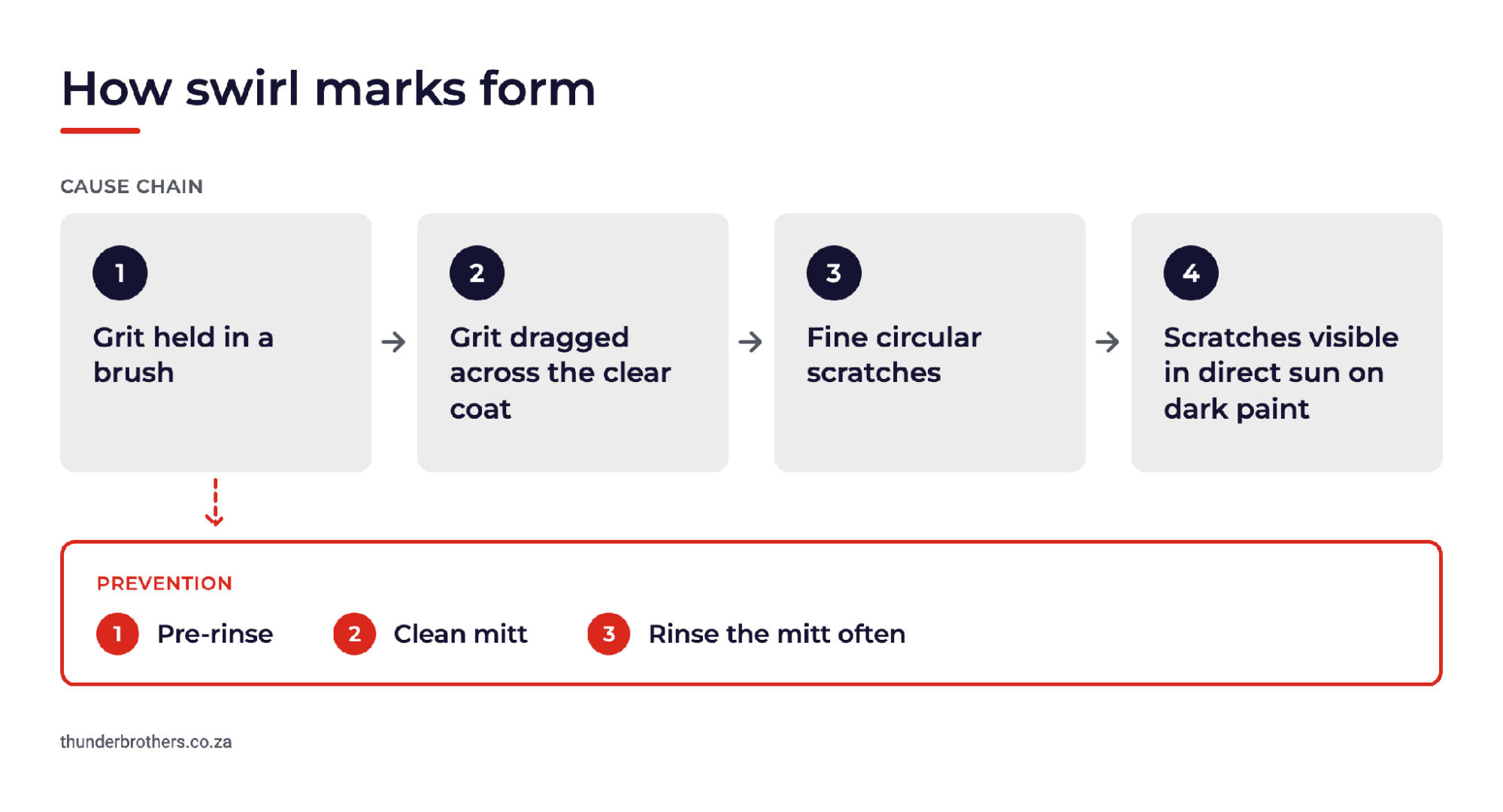
Swirl marks are fine circular scratches in the clear coat, the clear top layer of the paint. They show in direct sun, most of all on dark cars. XPEL explains the cause in a brush wash: the brushes can collect dirt particles, and that grit acts like sandpaper when it meets the paint. AAA’s advice for anyone who does use an automatic is to pick one with cloth brushes, which are less likely to scratch.
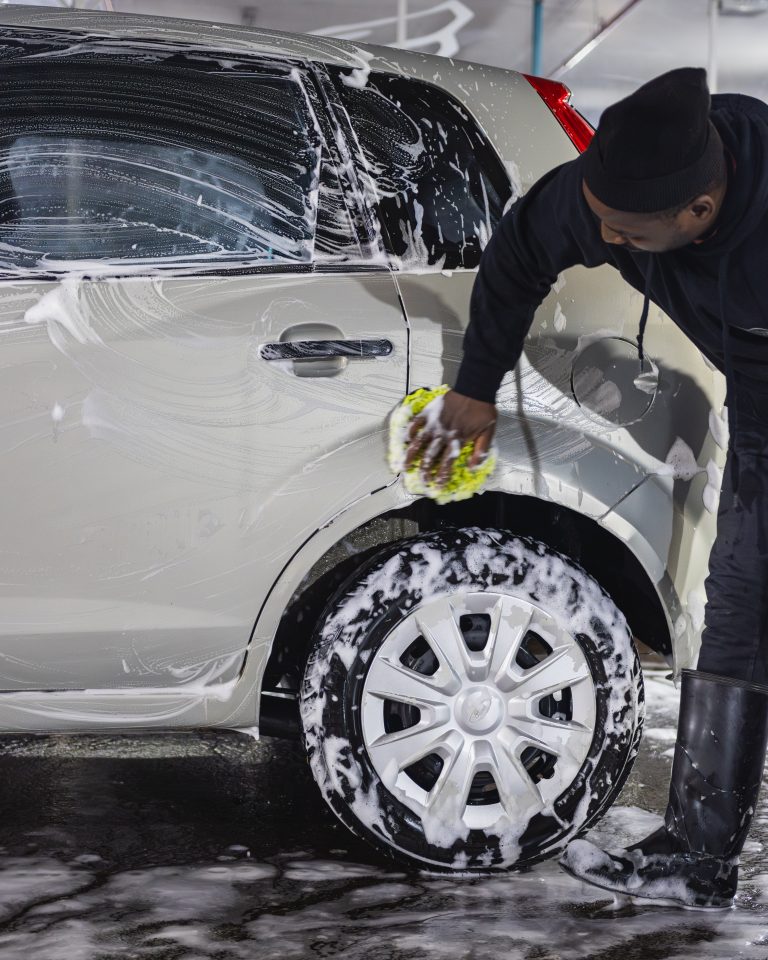
A professional hand wash works the other way round. Loose grit is rinsed off before anything touches the paint, the mitt is rinsed clean between panels, and the wheels get their own tools. A brush that has just washed the car in front of yours gets none of that care, and you cannot inspect it before you pay.
Key fact: swirl marks come from grit dragged across paint. A pre-rinse, a clean mitt and plenty of rinse water stop it before it starts.
Once swirls are in, no wash will take them out. That needs a machine buff, which polishes the clear coat back to an even surface.
-
Touchless Car Wash: Gentler, But Not a Deep Clean
The myth is that if nothing touches the paint, nothing can harm it. In reality, a touchless car wash replaces contact with chemistry.
Without brushes or mitts, the detergent does more of the work. XPEL says touch-free washes may make up for the lack of contact with heavily concentrated cleaning agents. That is no reason to avoid them, just a reason not to put a freshly waxed car through one every week.
The bigger limit is what stays behind. Loose dust and fresh dirt come off well. Heavy road grime and bugs stuck to the surface often stay put, so the car can look clean while wet and dull once dry.
A touchless rinse can tide the car over between washes, but bonded grime needs a proper hand wash before it sets into the paint.
-
Part by Part: Are Automatic Car Washes Bad for Your Car
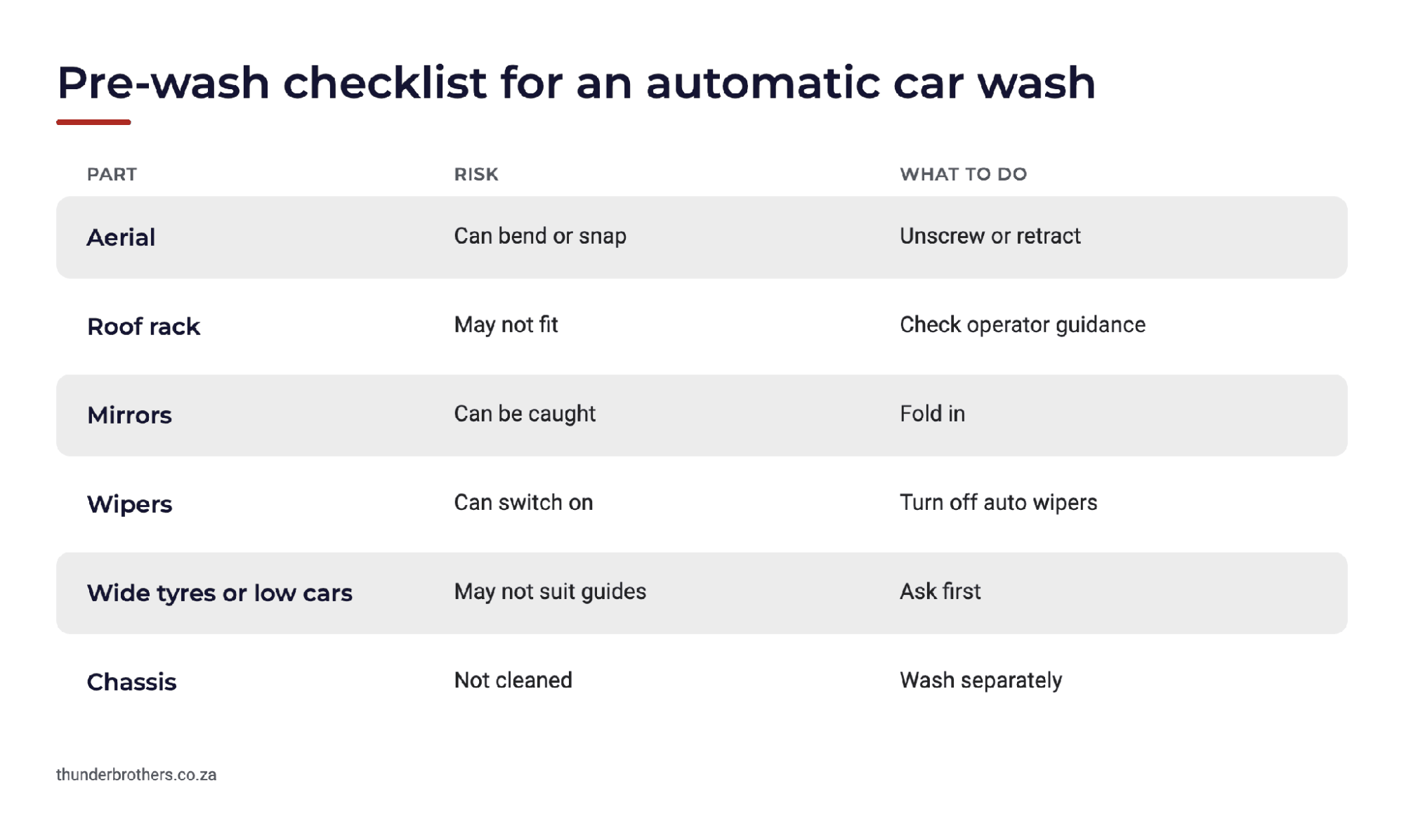
Usually not, if you prepare the car first. These are the checks to make before using an automatic car wash:
- Aerials. Unscrew or retract them. Protruding parts can be caught by brushes.
- Roof racks and carriers. Check the operator’s guidance first.
- Mirrors. Fold them in.
- Wipers. Switch them off, including rain-sensing wipers.
- Wheels and tyres. Low cars, wide tyres and aftermarket mags can sit awkwardly in conveyor guides, so ask the operator first.
- Gear selection. On a conveyor the car rolls through in neutral, and some cars, recent Hondas among them, have a set procedure to hold neutral. Check the owner’s manual.
Matte paint and wraps need their own care. Hyundai, for one, warns owners of matte paint cars not to use automatic washes with rotating brushes.
-
Wheels, Chassis and Interior: What a Machine Cannot Reach
Picture a bakkie back from the coast or a gravel farm road. The body is dusty, but the real dirt is packed into the arches, baked onto the mags and caked under the chassis.
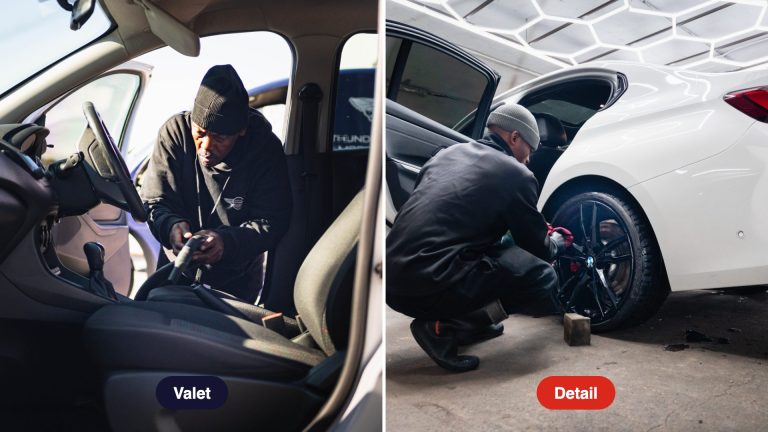
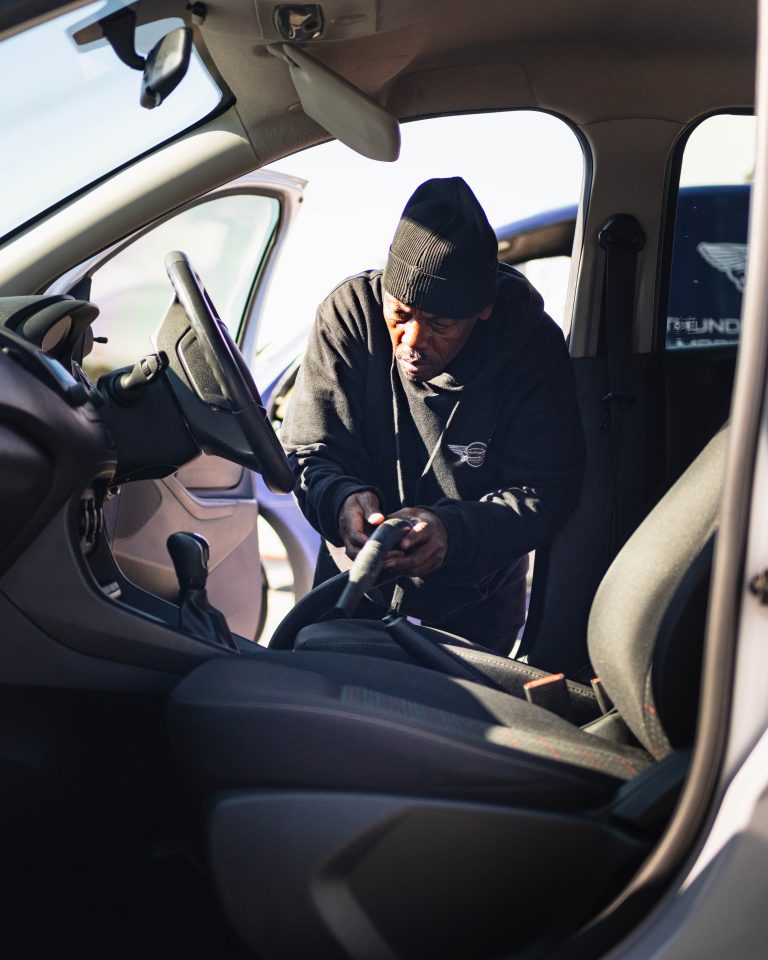
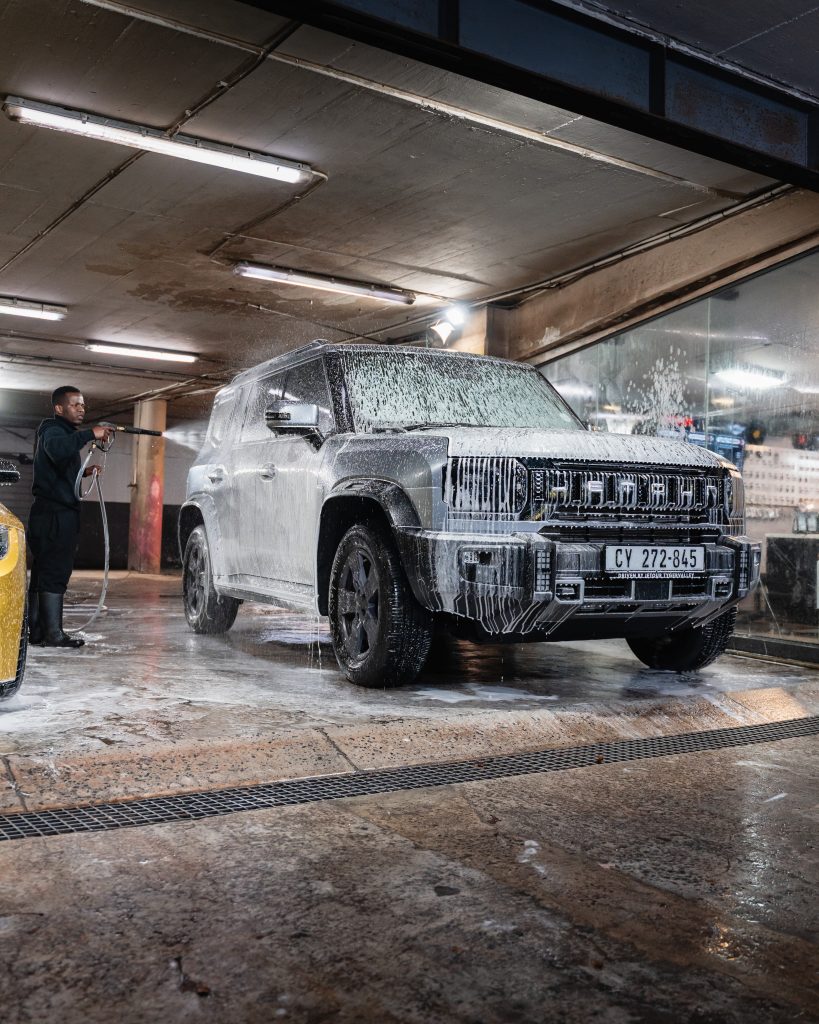
An automatic washes mostly the body panels, and never the inside. A hand wash reaches the rest because a person can. The wheels get their own tools, the arches get a proper rinse and the door shuts get wiped. Inside, a vacuum deals with the sand and biscuit crumbs. For marks on the upholstery, our guide on how to clean car seats covers fabric, leather and vinyl, and if smells are the issue, here is how to freshen your car interior.
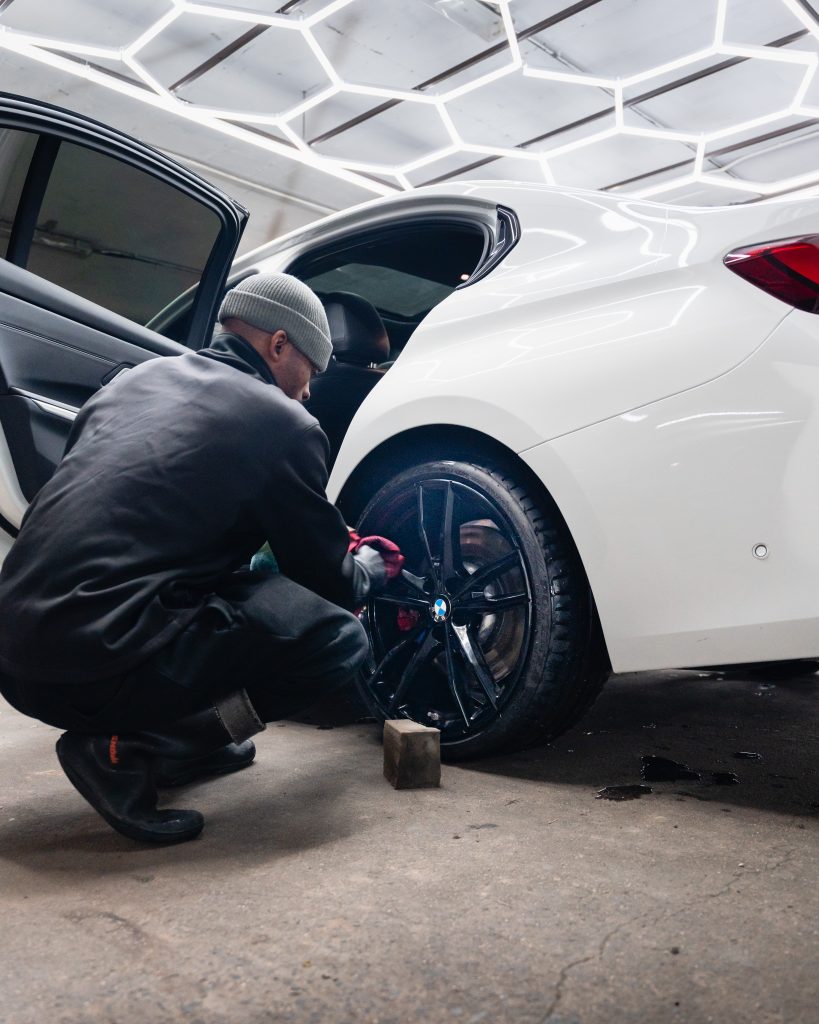
After a beach or gravel trip, add a chassis clean to any package, or choose the Superior, which adds silicone on the arches and an engine clean to the Usual.
-
Water Use, Compared Fairly
Water is where people expect machines to win easily. The honest picture is more mixed.
A hose left running at home uses far more water than a bucket wash. Commercial washes that reclaim water reuse part of what they pump, but the figures vary so widely between sites that we will not quote litres.
In Cape Town, the rules are changing. The City of Cape Town has confirmed Level 1 water restrictions from 1 December 2026. Under Level 1, private and informal car washes may use buckets or high-pressure, low-volume equipment, and commercial car washes stay open on condition that they recycle at least 50% of the water they use. The City’s permanent water rules already say a hosepipe used to wash a vehicle must have an automatic self-closing device.
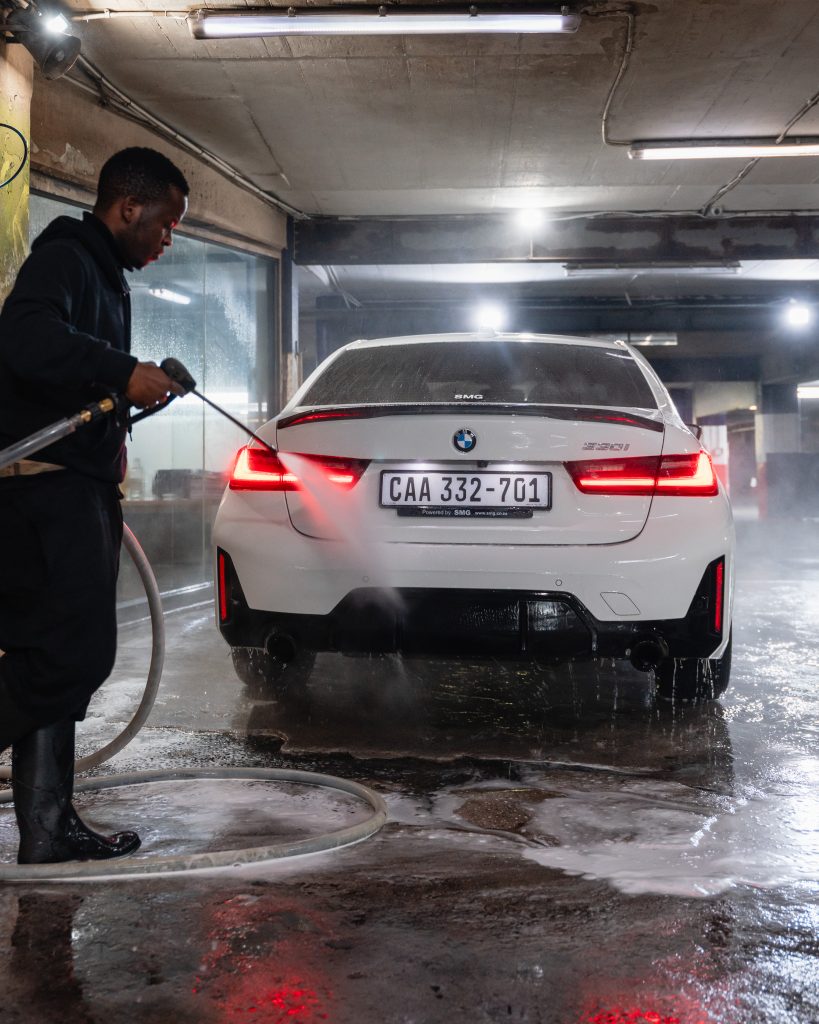
Key fact: from 1 December 2026, washing a car at home in Cape Town means buckets or high-pressure, low-volume equipment.
-
Price and Value: Compare What Each Wash Covers
A price only means something next to what it covers.
Wash type What it covers What is left for you Brush rollover at a fuel station Body panels, wash and rinse Mags, arches, door shuts and the inside Touchless automatic Loose dirt off the body, no contact Bonded grime, mags and the inside Bucket wash at home Whatever your kit allows All of it Thunder Brothers Usual Hand wash and dry, interior vacuum, tyre shine, mag clean Nothing for a routine clean Thunder Brothers Superior The Usual plus silicone on the arches and an engine clean Nothing for a routine clean If you would still need to vacuum, clean the mags and wipe the shuts yourself afterwards, the cheaper wash may not save you much. Prices move a little between branches, so every package and add-on is on the Thunder Brothers price list.
Key fact: compare what each wash covers, not just the price on the board.
-
Washing at Home Between Visits
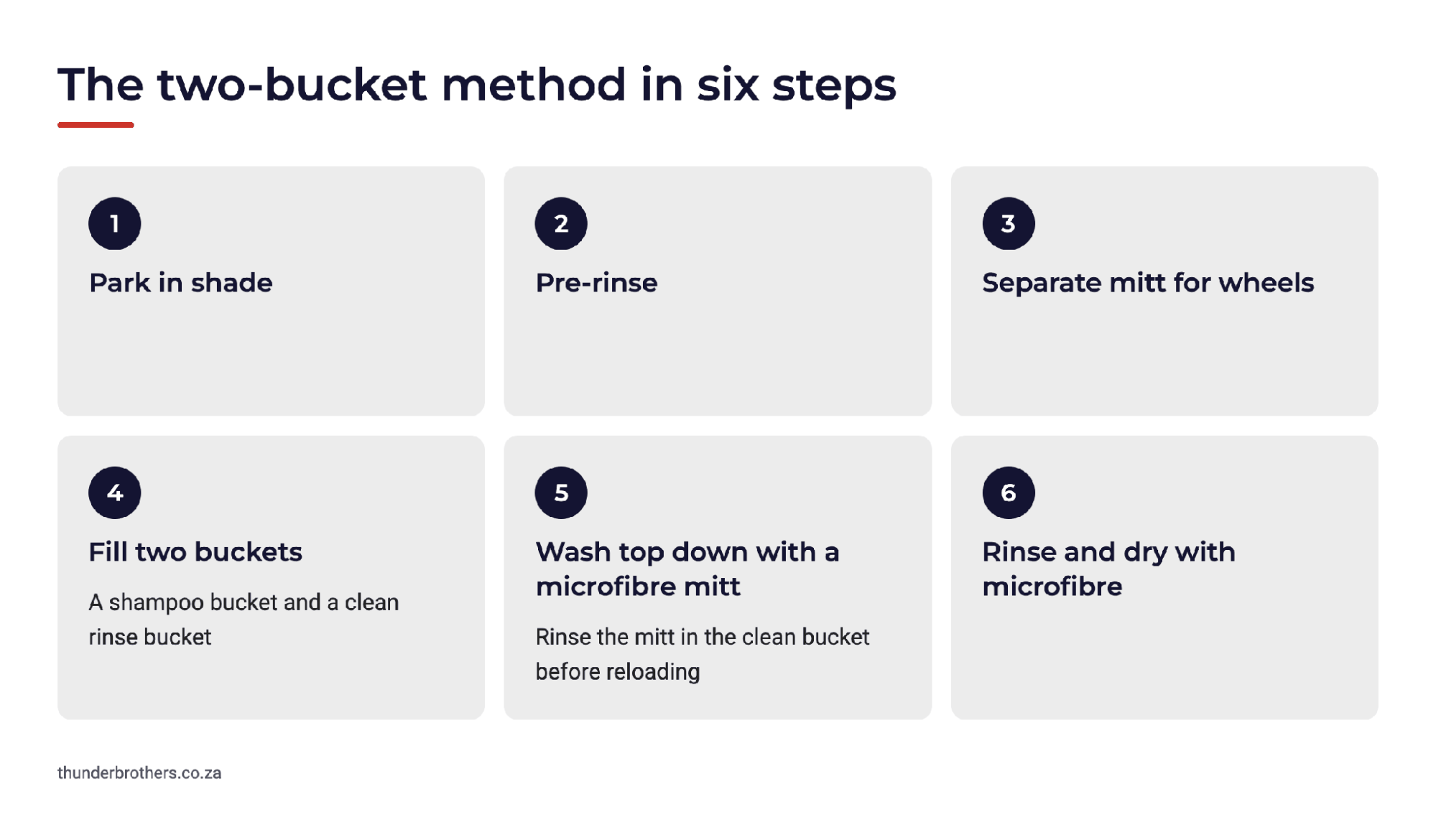
If you wash at home between visits, shade and the right kit make all the difference. Work in this order:
- Park in the shade. AAA warns that heat makes water dry fast and leaves spots and mineral deposits on the paint.
- Pre-rinse to lift loose grit. Snow foam, a thick pre-wash foam, helps if you own a pressure washer.
- Do the wheels first, with their own mitt or brush. AAA’s advice is never to use wheel tools on the body, because they carry grit.
- Fill two buckets, one with car shampoo and one with clean water. This is the two-bucket method.
- Wash from the top down with a microfibre mitt, rinsing it in the clean bucket before it goes back into the shampoo.
- Rinse well and dry with a clean microfibre towel.
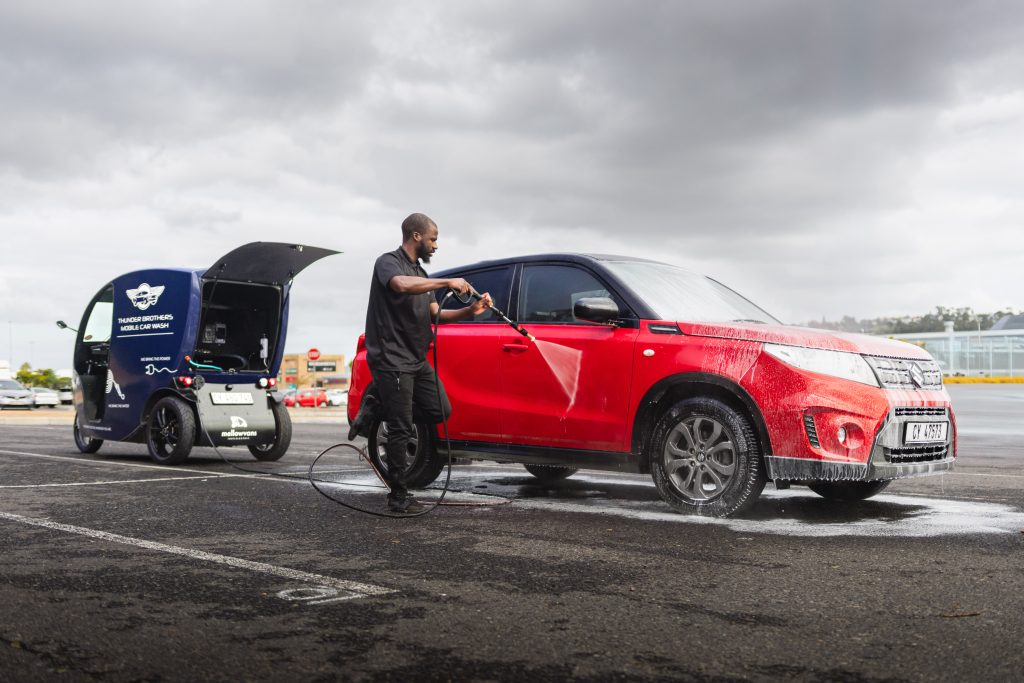
For a muddy bakkie, a car you are about to sell, or paint that already has swirls, hand it to a branch instead. In greater Cape Town, Somerset West, Hermanus and Bloemfontein, the mobile car wash comes to you with its own water and power, booked through the Thunder Brothers app.
-
Which Wash Suits Your Car
- New or dark paint. A hand wash, with the Duck’s Back adding a high definition wax that helps the paint shed water and dust. Dark paint shows every swirl.
- Daily commuter. The Usual, often enough that grime never gets the chance to bond.
- After a beach trip. A hand wash with a chassis clean, so the sand and salt come out of the arches and underside.
- Before a sale. A hand wash and a full car valet, plus a machine buff if the paint has swirls.
Our services page sets out what a wash, valet or detail each covers, side by side. The team at any branch will also tell you straight when a wash will do.
-
Frequently Asked Questions
Question: What is the safest car wash for your car?
Answer: A professional hand wash with clean mitts, plenty of rinse water and separate tools for the wheels is the gentlest option for paint. A touchless automatic avoids contact but relies on stronger detergents and can leave bonded grime behind. Brush rollovers carry the most risk of fine scratches, especially on dark paint.Question: Do touchless car washes really work?
Answer: Touchless car washes remove loose dust and fresh dirt well, which makes them useful between proper washes. Because nothing touches the paint, they struggle with heavy road grime and bugs stuck to the surface, so the car can look clean while wet and dull once dry.Question: Can an automatic car wash damage a car?
Answer: It can. Brushes that hold grit can leave swirl marks, and aerials, mirrors and loose trim can be caught. Matte paint and wraps are best kept out of brush washes altogether. On a conveyor the car rolls through in neutral, and some cars need a set procedure for that, so check the owner’s manual first.Question: Is a hand car wash better than an automatic?
Answer: For paint, yes. A professional hand wash lifts grit off with a pre-rinse and clean mitts instead of dragging it across the clear coat with a brush. It also reaches the mags, arches, door shuts and interior, which an automatic cannot. -
The Short Version
Brushes drag grit and touchless washes leave grime behind. In the hand wash vs automatic car wash choice, paint that matters to you is best left to hands, clean mitts and plenty of water. There is no need to book at any of our 48 branches. Find your nearest branch.
-
Resources
- AAA Club Alliance, 10 Car Wash Dos and Don’ts
- XPEL, How to Decide Which Car Wash Is Best for Your Car
- Motor1, These Car Wash Mistakes Could Seriously Damage Your Vehicle
- Honda, Owner’s manual: using a conveyor car wash
- City of Cape Town, Level 1 water restrictions this summer
- City of Cape Town, Water use regulations permanently in place