How to clean car seats properly depends on one thing above all: what the seats are made of. Whatever the material, the method follows the same order: identify the material, vacuum first, use the gentlest cleaner that works, never soak the foam underneath, and let the seat dry fully before anyone sits on it.
The steps below follow care guidance from car makers Volvo and Mazda and child seat maker Britax. They cover fabric, leather and vinyl, plus the local stains that cause the most trouble: red dust, beach sand, sunscreen and juice. When a stain or smell goes deeper than a home job can reach, a car valet at one of our 48 branches picks up where you leave off.
-
Before You Start: Check the Material and the Label
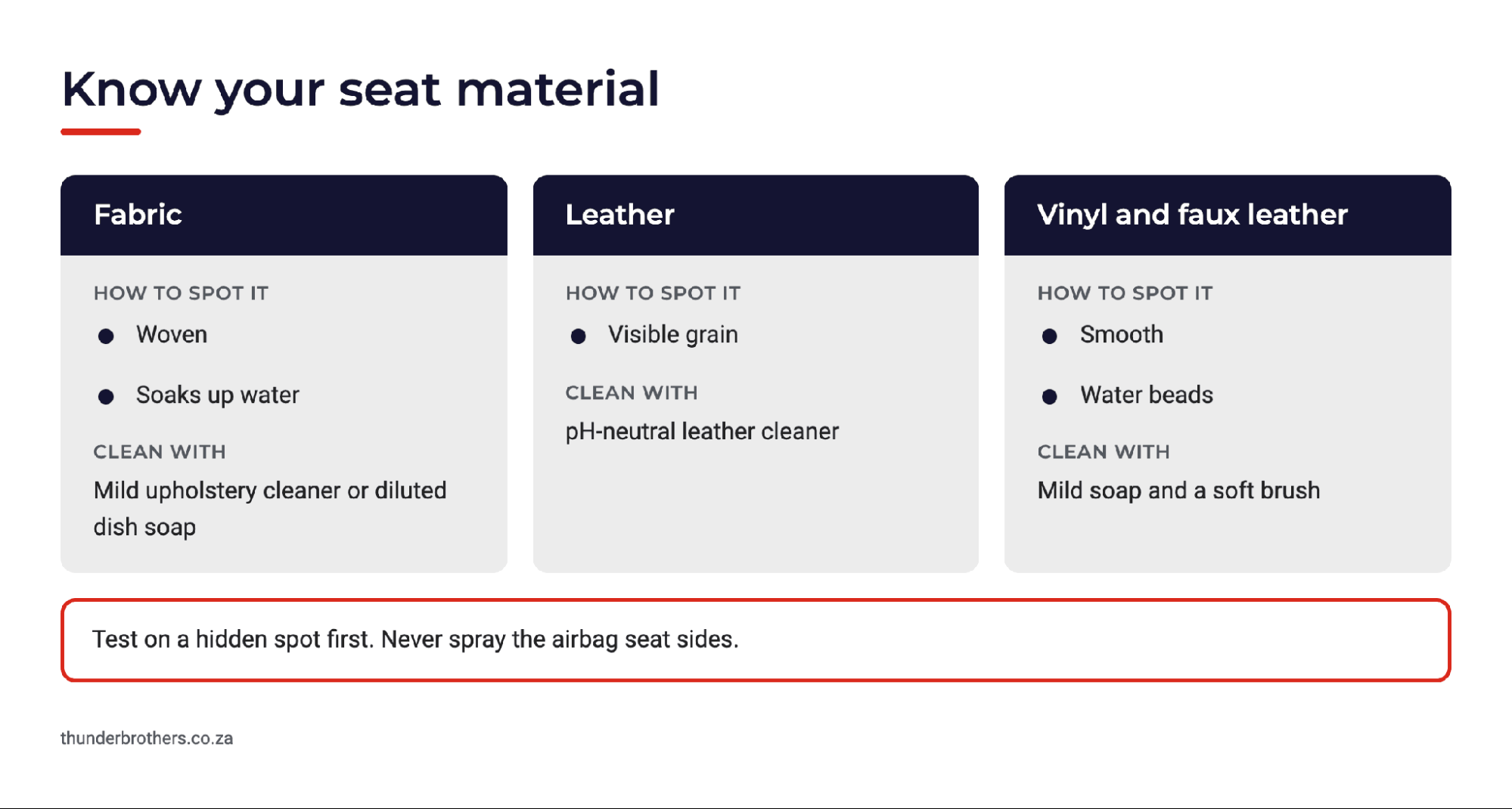
The wrong cleaner on the wrong material is the quickest way to mark a seat for good. Check the owner’s manual or the seat label first. Fabric is woven and soaks up a drop of water. Leather has a visible grain, often with small holes on ventilated seats. Vinyl and faux leather feel smooth and even, and water beads on them. If in doubt, treat the seat as leather.
Test any cleaner on a hidden spot first, such as the back of the seat base, and let it dry before carrying on.
Then look for airbag labels on the seat sides. Volvo’s owner guidance says never to spray cleaning agent directly on seat sides with side airbags, and to wipe them with a lightly dampened cloth instead.
-
How to Clean Fabric Car Seats
Fabric upholstery hides more dirt than it shows. Skip the vacuum and any cleaner simply turns the dust in the weave into mud.
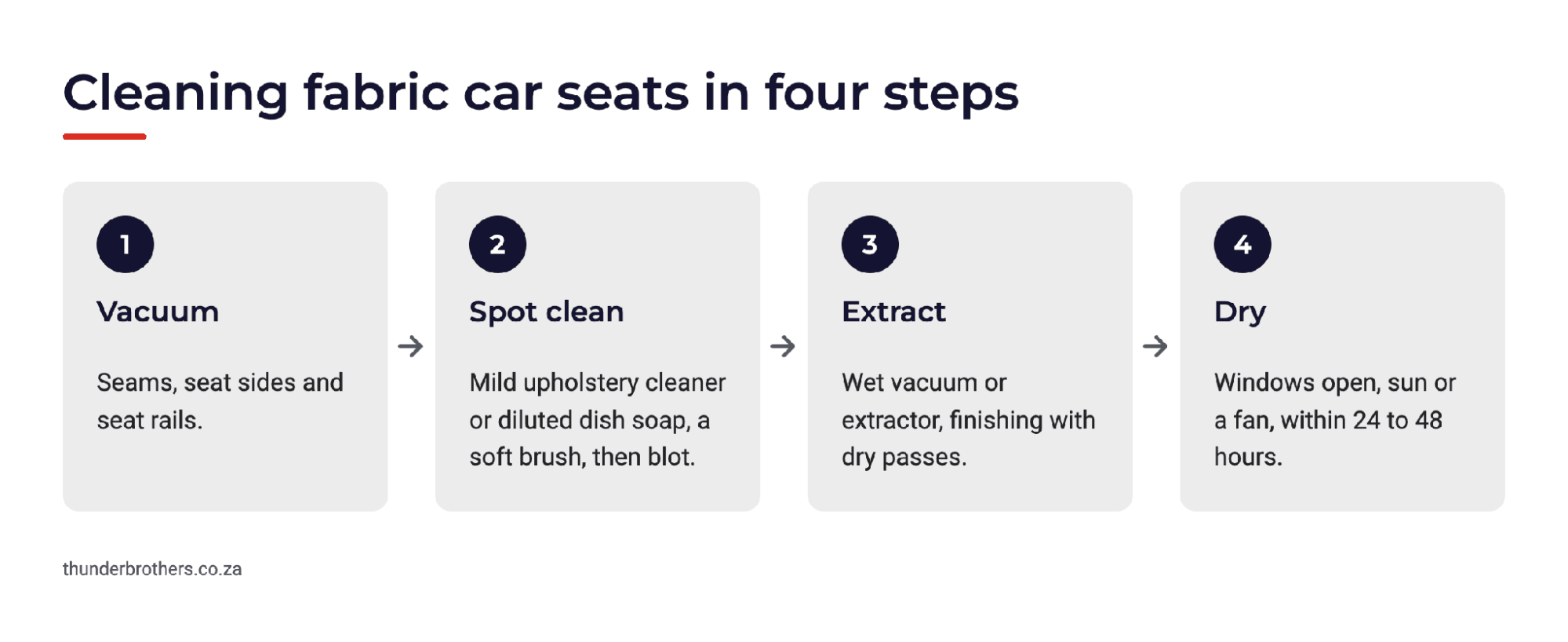
Vacuum, Including Seams and Seat Rails
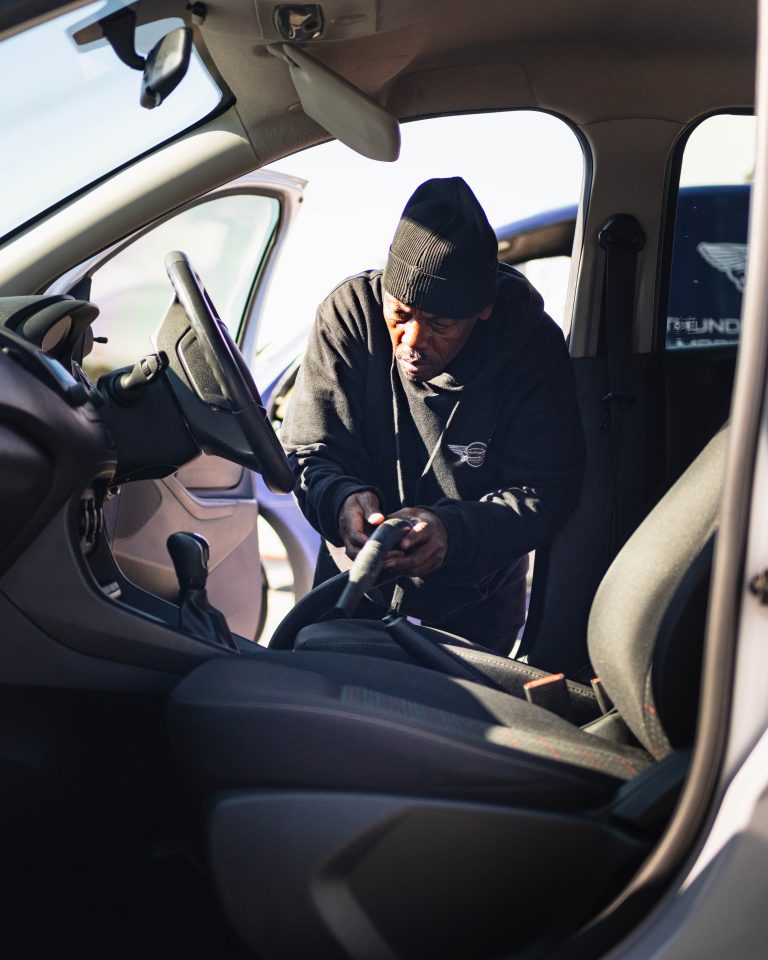
Run a crevice tool along every seam and down the side of the seat, where the gap by the console collects everything. Slide the seat fully forward, then fully back, to reach the seat rails and the carpet under them. Brushing the fabric first loosens grit and pet fur.
Spot Clean With a Mild Upholstery Cleaner, Then Blot
Mix a few drops of dish soap into warm water, or use a mild upholstery cleaner. Work it in with a soft-bristle brush, then blot with a clean microfibre cloth. Rubbing only pushes the stain deeper. Use as little liquid as possible: you are cleaning the fabric, not the foam behind it. For light marks, no carpet cleaner or wet vacuum is needed.
How to Wash Car Seats With an Extractor or Wet Vacuum
For seats that are dirty all over, an extractor (a machine that sprays cleaning solution and sucks the dirty water straight back out) does the job properly. Spray lightly, pass the nozzle slowly, then make a few dry passes with the spray off. A household wet vacuum works the same way if you brush the cleaner in first.
A steam cleaner lifts dirt from fabric too, but it adds heat and moisture, so keep it moving and keep it off leather and airbag seat sides.
Drying in Summer Heat and in a Damp Cape Winter
In summer, open windows and sunshine do most of the work. A damp Cape winter is slower, so park in the sun when it appears, open the windows and point a fan at the seat. Never leave a seat damp for days.
Key fact: the US EPA says drying wet materials within 24 to 48 hours usually prevents mould.
-
How to Clean Leather Car Seats
Leather needs less water than fabric, not more. Vacuum with a soft brush attachment so grit does not scratch the surface. Then put a pH-neutral leather cleaner on a soft brush or cloth, never straight onto the seat. Mazda’s owner’s manual recommends a special leather cleaner or about 5% mild detergent, and warns that moisture left on leather can harden it, so wipe each panel dry as you go.
On perforated or ventilated seats, use a barely damp cloth so liquid stays out of the holes. Let the leather dry out of harsh sun, which is what cracks seats over time. Leather also needs feeding now and then to stay supple, a separate step from cleaning.
-
Vinyl and Faux Leather Seats
Vinyl is the easiest of the three. Use mild soap in warm water, a soft brush for the grain and stitching, a damp microfibre cloth to rinse, then a dry towel. Keep solvents and alcohol wipes away, as they leave vinyl stiff and prone to cracking. Faux leather gets the same treatment.
-
How to Remove Stains From Car Seats
The wrong first move sets a stain rather than lifting it.
Red Dust and Mud
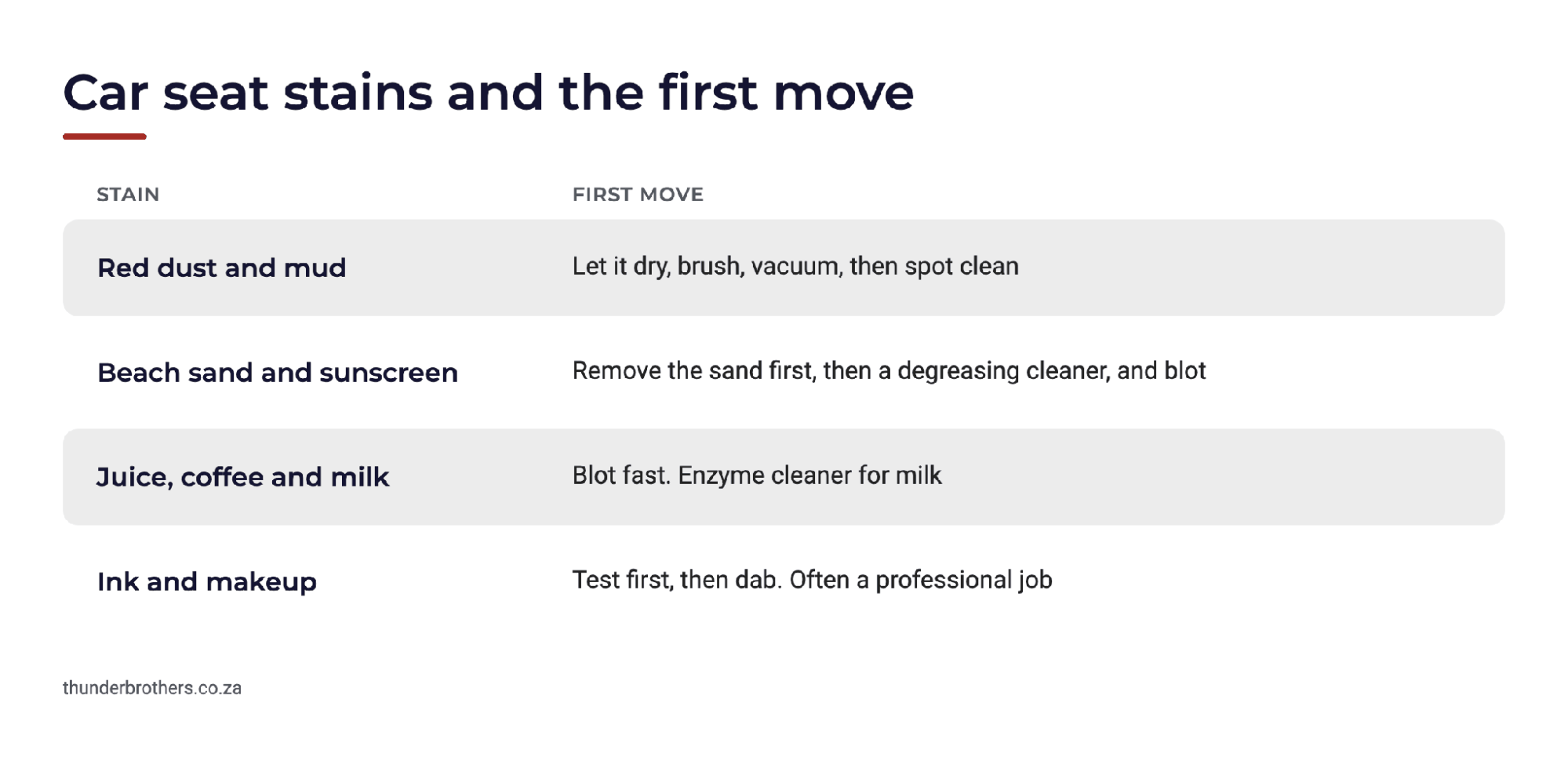
Let it dry completely. Wet red Highveld dust smears into fabric, while dry dust brushes out. Brush it loose, vacuum, then spot clean what is left.
Beach Sand and Sunscreen
Get every grain of sand out first with a stiff brush and a slow vacuum, because liquid turns it into a gritty paste. Sunscreen is oily, so water just spreads it. Use a degreasing upholstery cleaner on fabric, tested first, and blot.
Juice, Coffee and Milk
Blot fast with a dry cloth, then spot clean. Juice left on a hot seat turns sticky. Milk needs an enzyme cleaner (one that breaks down the proteins) or it starts to smell. If a smell has already set in, our guide on how to freshen your car interior covers the next steps.
Ink and Makeup
Test first, because the wrong solvent spreads ink. Dab rather than scrub. On light fabric or leather, ink, lipstick and foundation are often a professional job.
-
Baby Seats and Kids’ Seats
Remove the covers and follow the maker’s wash instructions on the label or in the manual. The harness is different. Britax says strap webbing should not be submerged, machine washed, ironed or bleached, so spot clean the straps with mild soap and let everything dry fully before refitting the seat.
Key fact: child seat straps are spot cleaned only. Never soak or machine wash them.
-
How to Clean Car Seats at Home Without Damaging Them
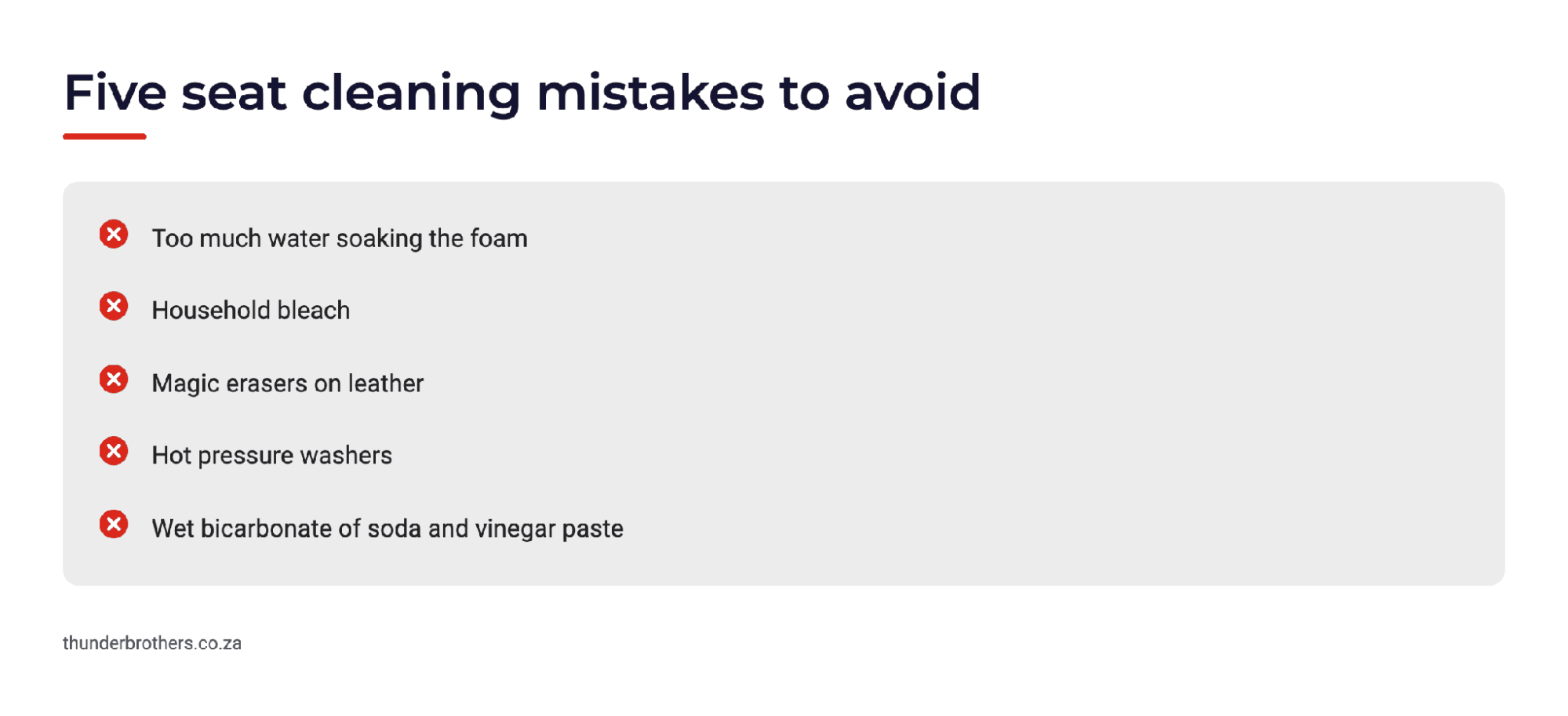
Most home cleaning damage comes down to a few habits.
- Too much water. The myth is that more water means a deeper clean. In reality it soaks the foam, and damp foam grows mould.
- Household bleach. It strips colour from fabric and has no place near leather or child seat straps.
- Magic erasers on leather. They are mildly abrasive and wear through the finish.
- Hot pressure washers. They force water deep into the seat and anything wired into it.
- Fizzing home remedies. Bicarbonate of soda works as a dry sprinkle you vacuum off. Mixed with vinegar into a wet paste, it mainly adds water.
-
When a Seat Shampoo Is Worth It
Home cleaning handles most spills. Some jobs are past it: a stain that survives a second attempt, a smell living in the foam, or a car about to be sold.
At Thunder Brothers branches, the team takes care of seats as a seats only add-on, a baby seats add-on, or as part of the Royal Treatment, which includes a deep clean of the roof lining, carpets and seats. Every package and add-on is on the Thunder Brothers price list.
If grime has worked into the stitching across the whole cabin, an interior deep clean goes further. The team will tell you straight if a wash will do instead.
-
Frequently Asked Questions
Question: What is the best way to clean fabric car seats?
Answer: Vacuum first, including the seams, then spot clean with a mild upholstery cleaner or diluted dish soap and a soft brush. Blot with a microfibre cloth and keep the water to a minimum so the foam stays dry.Question: What can I use to wash my car seats at home?
Answer: For fabric, a mild upholstery cleaner or diluted dish soap, a soft brush, microfibre cloths and a wet vacuum to lift the dirty water out. For leather, a pH-neutral leather cleaner. Avoid bleach, strong solvents and soaking the seat.Question: Can I use vinegar to clean car seats?
Answer: Diluted white vinegar can help lift some stains and odours from fabric, and the smell fades as it dries. Keep it off leather: car makers advise a leather cleaner or mild, diluted detergent there. Test on a hidden area first.Question: How long do car seats take to dry after cleaning?
Answer: It depends on the water used, the fabric and the weather. Lightly cleaned fabric seats can dry within a few hours on a hot, dry summer day with the windows open, and take much longer in a damp Cape winter. -
Clean Seats, Done Properly
Start with the material, keep the water light and give every seat time to dry. Knowing how to clean car seats yourself handles most spills, and a branch can take over when a stain or smell has set in. There is no need to book. Find your nearest branch.
-
Resources